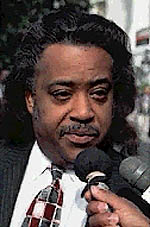
 Yesterday I had the opportunity to attend the Hip Hop Summit organized by The Reverend Al Sharpton, President of National Action Network and David Mays, CEO of The Source. While I commend the efforts of the event&Mac226;s organizers and the industry people who came out to address social responsibility in Hip Hop, I will venture to say that the event will have no effect on the music industry or on rap artists. My chief complaints are these: First there was no agenda. While the organizers thought that it was a sign of flexibility not to have an outline of subjects to be addressed, in truth it was a sign of chaos. There was no cohesion in the subjects covered by the various speakers, for example, Master P talked about forming a Hip Hop union which would educate artists and provide a pension-like program to assist artists in need; the Reverend Al Sharpton talked about racial and youth profiling, Eddie De Jesus of the Source Youth Foundation discussed supporting youth programs and Minister Conrad Muhammad addressed how the images rap artists are crafting for themselves is affecting the Hip Hop community. With all of these topics there was no way to begin to resolve any of the matters that were broached. Yesterday I had the opportunity to attend the Hip Hop Summit organized by The Reverend Al Sharpton, President of National Action Network and David Mays, CEO of The Source. While I commend the efforts of the event&Mac226;s organizers and the industry people who came out to address social responsibility in Hip Hop, I will venture to say that the event will have no effect on the music industry or on rap artists. My chief complaints are these: First there was no agenda. While the organizers thought that it was a sign of flexibility not to have an outline of subjects to be addressed, in truth it was a sign of chaos. There was no cohesion in the subjects covered by the various speakers, for example, Master P talked about forming a Hip Hop union which would educate artists and provide a pension-like program to assist artists in need; the Reverend Al Sharpton talked about racial and youth profiling, Eddie De Jesus of the Source Youth Foundation discussed supporting youth programs and Minister Conrad Muhammad addressed how the images rap artists are crafting for themselves is affecting the Hip Hop community. With all of these topics there was no way to begin to resolve any of the matters that were broached. Secondly, rather than have a dialogue about the issues and come to some resolution(s), the event was mainly a rally, where various hand-picked people aired their views from the dais while the invited guests were rendered mute in their chairs. One may question the reason for inviting people if their input was irrelevant to the conversation. A cynic would respond by saying that an audience provided the ambiance needed to get the event and its conveners on the evening news, which it did. 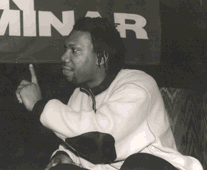 While this Hip Hop Summit's press release touted it as „an historic event, KRS-One when he spoke correctly stated that these summits have been done before. According to KRS-One, Afrika Bambaataa in 1987 convened the first one, the Unity Summit, held at the Latin Quarter nightclub. KRS-One said that at that meeting, the Stop The Violence Coalition was formed and in 1988 they recorded the song „Self-Destruction to bring awareness to Black on Black crime. The song made $600,000, which was then donated, to the National Urban League. Subsequently, West Coast rap artists recorded the song, „All In the Same Gang and in 1996, in an effort to quell the East Coast-West Coast conflict, The National Hip Hop and Rap Summit convened by the National African American Leadership Summit, then headed by Dr. Benjamin Chavis, bringing together industry heads like Suge Knight and Chuck D as well as activists from around the country. In the intervening years there have also been smaller regional meetings, like one held by Co-motion in New York City, as well as private meeting between particular people or groups, yet we still have not resolved any of the main issues in Hip Hop: violence, misogyny and the financial exploitation of artists. While this Hip Hop Summit's press release touted it as „an historic event, KRS-One when he spoke correctly stated that these summits have been done before. According to KRS-One, Afrika Bambaataa in 1987 convened the first one, the Unity Summit, held at the Latin Quarter nightclub. KRS-One said that at that meeting, the Stop The Violence Coalition was formed and in 1988 they recorded the song „Self-Destruction to bring awareness to Black on Black crime. The song made $600,000, which was then donated, to the National Urban League. Subsequently, West Coast rap artists recorded the song, „All In the Same Gang and in 1996, in an effort to quell the East Coast-West Coast conflict, The National Hip Hop and Rap Summit convened by the National African American Leadership Summit, then headed by Dr. Benjamin Chavis, bringing together industry heads like Suge Knight and Chuck D as well as activists from around the country. In the intervening years there have also been smaller regional meetings, like one held by Co-motion in New York City, as well as private meeting between particular people or groups, yet we still have not resolved any of the main issues in Hip Hop: violence, misogyny and the financial exploitation of artists.The genesis for these summits is normally the same, there is some calamity concerning Hip Hop, in this instance it was the melee at this year's Source Awards, then, music industry people and activists jump up and say that something needs to be done and they put together a summit. People are invited, they see old friends, talk, even make some solids recommendations, but ultimately nothing changes, especially since the general public is rarely invited to participate in the discussions. With most business or political negotiations and summits, there are clearly defined factions, each with clearly defined agendas. These factions come together either to avoid conflict or to merge; within the Hip Hop community there is never any resolution because factions are fluid and the agendas are undefined. The artists, always the focus of the discussions, want to continue to make money, while also being down with the community (their consumer base). The artists then flow between the community and record companies, paying lip service to the community, but ultimately falling in line with the corporate interests who pay them. At this summit as well as prior ones, most of the artists and the few industry leaders who participated, said a few words about the importance of artists speaking about what they see and know and then they bounced. In short hand this means „business as usual,‰ because the corporate entities and the artists know that there will be no repercussions from the Hip Hop public if they do not change their behavior. If anything is ever going to change in Hip Hop, in connection with social responsibility, it will not come out of any closed-door summit. Change will come when the Hip Hop public around the country wakes up, organizes in their communities and tells the artists and the corporation entities (radio, video shows and record companies) what they are want and what they will no longer tolerate.  An artist should be free to speak his or her truth, but it is the public that should determine whether it is something that they want to hear, and if so when. "Cash and Ass" songs and videos are fine, but why has the public allowed this material to be played when children are listening to radio and watching television. Only Mos Def spoke to this point, questioning the appropriateness of kids viewing or listening to adult material. Why is it that 'nigger' and 'bitch' are barely deleted any more from songs aired on the radio? As a people we have always had risqué entertainment, but before we knew what was for children and what was for adults; now we have muddied the line or rather, we have allowed primarily white-owned corporate entities to do so. If impressionable kids are bombarded day and night with lyrics and images of gangsters, pimps and hos, it is reasonable to assume that they are going to emulate these characters. Additionally if they see millionaire rap artists scuffling or getting locked up, they will think that this behavior is also acceptable. Moreover, for the kid from the 'hood' who wants to 'bling bling' like his favorite artist, he will find the money, even if means slinging on the corner or knocking you in your head. An artist should be free to speak his or her truth, but it is the public that should determine whether it is something that they want to hear, and if so when. "Cash and Ass" songs and videos are fine, but why has the public allowed this material to be played when children are listening to radio and watching television. Only Mos Def spoke to this point, questioning the appropriateness of kids viewing or listening to adult material. Why is it that 'nigger' and 'bitch' are barely deleted any more from songs aired on the radio? As a people we have always had risqué entertainment, but before we knew what was for children and what was for adults; now we have muddied the line or rather, we have allowed primarily white-owned corporate entities to do so. If impressionable kids are bombarded day and night with lyrics and images of gangsters, pimps and hos, it is reasonable to assume that they are going to emulate these characters. Additionally if they see millionaire rap artists scuffling or getting locked up, they will think that this behavior is also acceptable. Moreover, for the kid from the 'hood' who wants to 'bling bling' like his favorite artist, he will find the money, even if means slinging on the corner or knocking you in your head. Is an artist's free speech more important than the effect that it may have on the public? This is not about censorship, but about community control. In that vein, where is the mix of rap music on the radio? Why do I have to hunt the underground stations for Dead Prez, Jurassic 5 or Slum Village but I can hear Nelly, Jay-Z, Ludacris or Lil' Kim on commercial stations practically every hour, across the nation? Is the Hip Hop community really making these choices, when by and large Blacks do not own the record companies, the commercial radio stations or cable networks that produce or distribute the material? Over and over again, so-called community leaders bemoan the state of rap music and Hip Hop, as if they are powerless to effect change. In a capitalist society change comes when you tap into corporate wallets. In reality, they know this, but they are uncomfortable with the prospect of taking actions or setting standards that will affect young Black artists. However, at this point in time, rap music and Hip Hop culture has become corporate entertainment, whereby many Black rap artists get paid not for speaking their individual truth but for performing the roles of gangsta, pimp and ho for the enjoyment of white audiences. Black communities have to decide what they want for themselves and their children and then convey that to their local radio station, cable networks, their advertisers and to the record companies and artists. This communication can take the form of organized protests, letter-writing/call-in campaigns and boycotts. To continue to expect the music industry to police itself when so much money is at stake is ridiculous. Like the characters in Spike Lee's movie Bamboozled, many Black people in the music industry have sacrificed their dignity and self-respect to make a buck. By supporting their efforts, the Hip Hop public is contributing to our own continued oppression, when whites constantly see us portrayed as criminals and hoochies. There is room for truth in entertainment but there should also be room for elevation. Like De La Soul said, „[I] instead of keeping it real, you should try to keep it right Yvonne Bynoe is the co-founder of Urban Think Tank, Inc. She can be emailed at mailto:urbanthinktank@usa.net and their web site is www.urbanthinktank.org. |